Showing posts with label Coke. Show all posts
Monday, October 10, 2011
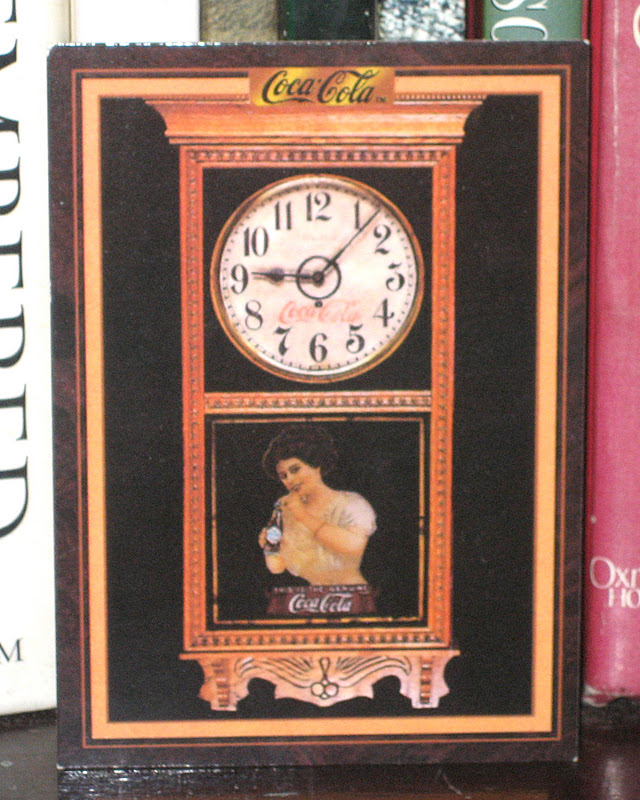
Coke Card 185 Series 2
What you are about to read you won’t find on any official Coca-Cola history site because the corporation would rather keep these facts buried and forgotten about.
The soda giant Coca-Cola has been a favorite drink for millions of people all over the world for the last 100+ years. Through out the years the company has tried everything under the sun to sell their products to whomever they could which has brought a lot of controversy on to them.
In the past 100 years the company has been in trouble with racism, child labor, water depletion and much more. I was truly speechless after some of the facts I heard about and you might be to. So if you got an interest in Coca-Cola then this might be for you!
Inventor of Coca-Cola
As many people know, Coca-Cola was established in May 1886 by doctor/pharmacist John Pemerton as a nerve tonic. What you probably didn’t know was that Dr. Pemerton was considered a junkie who was addicted to morphine big time. John died only 2 and half years after establishing the soft drink and trademark.
Cocaine in Coca-Cola
Now it’s no big surprise to most people that Coca-Cola’s main addictive ingredient was cocaine. About 60mg of the drug was used in each serving of Coke until 1903 when they company claimed to have removed the ingredient. Funny thing about it is Coca-Cola still uses and imports coca leaves which are pretty much the main ingredient in the production of cocaine. Also some officials for Coke claimed that the use of cocaine in the soft drink was always a rumor.
Slogans
Up till the early to late fifties Coca-Cola was believed to have healing properties and with that some pretty unique slogans started to appear on the products. Some you might have heard, others might be totally new to you.
1886 “Coca-Cola Delicious, Refreshing, Exhilarating” No doubt it was exhilarating when they were using cocaine as an additive.
1900 “For Headache & Exhaustion, Drink Coca-Cola” Again I don’t know what cocaine would do for a headache but there’s no doubt the drug takes away exhaustion.
1905 “Coca-Cola Revives and Sustains”
Coca-Cola & the Nazi’s
Now as we all know Coca-Cola is an American made soda drink so when I was researching Nazi history for another article, I was totally surprised in what I found. In 1936, Coca-cola sponsored the Berlin Olympics also known as the “Nazi Olympics”. While Britain was at war with Germany the company continued to do business behind enemy lines and advertised beside the Nazi Regime. As America enter the Second World War, German Coca-Cola bottling plants could no longer get the sugar/syrup to make the drink so they invented another drink for the Nazi public called “Fanta”.
Coca-Cola and the Civil Rights Movement
Now again when I came across this fact it blew me away. A day before Martin Luther King was assassinated he held a speech asking the people to boycott Coca-Cola and stop buying their products because of the way the black workers were being treated. Supposedly white workers where getting paid a much higher wage for little work where as the African Americans where expected to do long hours and back breaking work for little pay and no chance of advancement within the ranks of the company.
Human Rights Violations and Murder in Colombia
1n the early 2000’s, Colombia Coca-Cola bottle workers that were with the union started receiving death threats to leave the union, and if they didn‘t comply then they would be killed. Shortly after the message workers started turning up dead.
In 2004, a New York City councilor took a fact finding delegation to Colombia. Once there the councilor found that the Coca-Cola workers were the victims of at least 179 major human rights violations and 9 murders.
Then in Jan 2007 a group known as the “Black Eagles” went on TV to tell the Colombian public if union workers and other didn’t stop basically complaining about Coca-Cola’s work ethics then they would be killed.
Coca-Cola was being blamed for not providing a safe work place and for not taking responsibility for their actions which caused or allowed murders on their properties. Some Colombia officials go on to say or imply Coca-Cola is in someway responsible for these murders of union workers or allowed them to happen which they totally deny.
Biggest Racial Discrimination Payout
In only seems fair after all the stories about racial discrimination that finally in 2000 after investigations into the allegations the federal government found Coca-Cola guilty of the charges and ordered them to pay the biggest racial discrimination payout in history. Coca-Cola had to pay various victims restitution which added up to nearly $200 million. If you ask me that’s nothing compared to what they should pay for the decades of abuse against their workers.
Coca-Cola & Coca Leaves
Although Coca-Cola is suppose to contain no trace of cocaine like officials say, one of the main ingredients is the coca leave which is the main key to making cocaine. It’s a known fact that 8 tons of coca leaves are imported from South America each year by Coca-Cola and if any other regular citizen brought any of this into the states then chances are they would be arrested for drug trafficking.
Coca-Cola’s War on Water
I have read some wild stuff about this company but this one I just couldn‘t believe.
Years back Coca-Cola launched what some people call a “War” against water called “Just say no to H2O”. What this basically consisted of was the Coca-Cola Company offered its various suppliers like restaurants and so on incentives to push their products on customers when they ordered the free tap water. People eventually found a link on the internet and started sharing it which soon caused the “War” to end.
Coca-Cola & Water Depletion in India
Finally, this one had to be the biggest surprise to me. It takes 2 liters of water to make just 1 liter of Coke. In 2004, farmers in India held protests because Coca-Cola bottling plants where basically bleeding the water wells dry. It got so bad that Coke had to start shipping in water to many off its plants in 3rd world countries.
Over 290 billion liters of water are used every year by Coca-Cola around the globe and shows no signs of slowing down. As people in 3rd world countries continue to die because of a lack of clean water, Coca-Cola’s pockets just keep getting bigger and bigger at the expensive of innocent people.
If your interested in knowing the whole dark history about America’s most popular soft drink then you got to check out the Unofficial Coca-Cola History website at: http://www.naturalnews.com/003228.html and you will be surprised in what you see and read.
Read more: http://www.bukisa.com/articles/128517_10-crazy-facts-about-coca-cola-you-did-not-know#ixzz1i71vWQL1
Coke Card 150
Coke Facts:
1. In many states (in the USA) the highway patrol carries two gallons of Coke in the truck to remove blood from the highway after a car accident.
2. You can put a T-bone steak in a bowl of coke and it will be gone in 2 days.
3. To clean a lavatory: Pour a can of Coca-Cola into the lavatory bowl and
let the "real thing" sit for one hour, then flush clean. The citric acid in the coke removes stains from vitreous China.
4. To remove rust spots from chrome car bumpers: Rub the bumper with a
crumpled-up piece of Reynolds Wrap aluminum foil dipped in Coca-Cola.
5. To clean corrosion from car battery terminals: Pour a can of Coca-Cola
over the terminals to bubble away the corrosion.
6. To loosen a rusted bolt: Applying a cloth soaked in Coca-Cola to the
rusted bolt for several minutes.
7. To bake a moist ham: Empty a can of Coca-Cola into the baking pan, wrap
the ham in aluminum foil, and bake. Thirty minutes before the ham is finished, remove the foil, allowing the drippings to mix with the Coke for
sumptuous brown gravy.
8. To remove grease from clothes: Empty a can of coke into a load of
greasy clothes, add detergent, and run through a regular cycle. The
Coke will help loosen grease stains. It will also clean road haze from
your windshield.
FYI:
1. The active ingredient in Coke is phosphoric acid. Its pH is 2.8. It will dissolve a nail in about 4 days. Phosphoric acid also bleaches calcium from bones and is a major contributor to the rising increase in osteoporosis.
2. To carry concentrated Coke syrup, the commercial truck must use the hazardous material place cards reserved for highly corrosive materials.
3. The distributors of coke have been using it to clean the engines of their trucks for about 20 years.
Sunday, October 9, 2011
Coke Card 86
Cola beverages (and other soft drinks) taste better when made with real sugar instead of corn syrup. Coca Cola is now using sugarcane - but not in Coca Cola. The sugarcane is being used in a process to make plastic Coke bottles that are 70% petroleum based and 30% sugar cane based. (2010)
Coca Cola was invented by Dr. John S. Pemberton in 1886. It was originally formulated with extracts of coca leaves and kola nuts. That's where the name comes from.
Coke Card 54
In Brazil, some misguided people vow that it increases sexual prowess, others are under the delusion that it makes a man impotent. In Haiti, they say it is the only thing that will cause Damballah and his wife Ayida Oueddo, a pair of the chief deities of the voodoo pantheon, to put in an appearance at a voodoo session. Chinese bankers have taken to serving it instead of tea, and Italian aristocrats offer it to their guests instead of champagne. Graceful gondolas carry it along the narrow canals of Venice, and sturdy, resigned burros tote it into the dusty Mexican hills. Bright red signs proclaim its worth in the shadow of the Matterhorn and beneath the blank, unastonished eyes of the great Sphinx. The gentle burps which it evokes from the drinker are heard amid the bustle of Parisian sidewalk cafes and amid the tinkling of Siamese temple bells.
People almost everywhere are buying it as if it were the biggest glass of ambrosia in the world for a nickel. Actually, according to the official and modest definition of its makers, it is only "a soft drink . . . best described as delicious and refreshing." Its name, of course, is Coca-Cola.
The Essence of America. The late William Allen White once described Coke as the "sublimated essence of all America stands for." To find something as thoroughly native American hawked in half a hundred languages on all the world's crossroads from Arequipa to Zwolle is still strangely anomalous, somewhat like reading Dick Tracy in French or seeing a Japanese actor made up to look like Abraham Lincoln. But it is reassuring. It is also simpler, sharper evidence than the Marshall Plan or a Voice of America broadcast that the U.S. has gone out into the world to stay.
Read more: http://www.time.com/time/magazine/article/0,9171,820569,00.html#ixzz1aO2466r6
Coke Card 201
A little about Coca-Cola and Coca leaves (cocaine)
Remember, Coca-Cola was originally marketed for its medicinal qualities.
This was a period of time when many patent medicines contained coca leaves or cocaine (an alkaloid extracted from the leaves), the most popular was 'Vin Mariani', invented by an Italian physician working in France, Angelo Mariani. Vin Mariani was widely imitated, and Pemberton at first produced an imitation of Vin Mariani before formulating his own concoction, Coca-Cola.
Coca-Cola never contained much cocaine - and the amount was quickly reduced to almost undetectable amounts after a few years, when cocaine's negative properties started to become evident. (Estimates are the syrup contained 1 part in 50 million - that would be about 1/2 ounce in 25 million gallons of Coca Cola).
Since 1929 there has been no cocaine in Coca Cola. The leaves were still used for flavor, but the alkaloids were completely removed.
Coke Card 252
Haddon Hubbard "Sunny" Sundblom (June 22, 1899 – March 10, 1976) was an artist best known for the images of Santa Claus he created for The Coca-Cola Company.
Sundblom was born in Muskegon, Michigan to a Swedish-speaking family. His father, Karl Wilhelm Sundblom, came from the farm Norrgårds in the village of Sonboda in Föglö of the Swedish-speaking Åland Islands, then part of the Russian Grand Duchy of Finland now Finland, and his mother Karin Andersson was from Sweden. Sundblom studied at the American Academy of Art.
Sundblom is best remembered for his advertising work, specifically the Santa Claus advertisements he painted for The Coca-Cola Company in the 1930s. Sundblom's Claus firmly established the larger-than-life, grandfatherly Claus as a key figure in Christmas imagery. So popular were Sundblom's images of Claus (Sundblom's images are used by Coca-Cola to this day) that the urban legend soon arose that Sundblom had actually created the modern image of Santa Claus.
According to the Coca Cola company: "For inspiration, Sundblom turned to Clement Clark Moore's 1822 poem "A Visit From St. Nicholas" (commonly called "'Twas the Night Before Christmas"). Moore's description of St. Nick led to an image of Santa that was warm, friendly, pleasantly plump and human. For the next 33 years, Sundblom painted portraits of Santa that helped to create the modern image of Santa -- an interpretation that today lives on in the minds of people of all ages, all over the world."
Sundblom also conceived Coke's mascot Sprite Boy who appeared in print ads during the 1940s and 1950s.
Sundblom is recognized as a major influence on many well known pin-up artists, such as Gil Elvgren, Joyce Ballantyne, Art Frahm, and Harry Ekman. In the mid-1930s, he began to paint pin-ups and glamour pieces for calendars. Sundblom's last assignment, in 1972, was a cover painting for Playboy's Christmas issue.
"Sundblom gets pigeonholed as the painter of Coca-Cola Santa Clauses, but this trivializes his central place in 20th century advertising art. More than any artist including Norman Rockwell, Sundblom defined the American Dream in pictures, proved by his work for virtually the entire Fortune 500. [Among his still-living legacy is the Quaker Oats man, posed by his assistant Harold W. McCauley.]"
Coke Card 267
Coke Trivia:
1. A Mexico City bottler produces more Coca-Cola than anyone, anywhere.
2. More than 5 billion bottles of Coke were consumed by military personnel during WWII. (At the start of the war, the sugar used in the syrup for civilian consumption was restricted down to 50% due to rationing. This lasted through Aug. 1947.)
3. Coca-Cola has been associated with the Olympic Games since the summer of 1928.
In the 1880s, Coca-Cola’s original formula was sold as a medicine for headaches and other ills, and did actually contain traces of cocaine. By 1903 the drug was so controversial that the company starting using only “spent coca leaves” and stopped advertising Coke as a cure for ails.
4. By the 1950s, service stations were selling more Coca-Cola than motor oil.
6. The first batch of Coca-Cola was mixed in a 30 gallon brass kettle hung over the backyard fire of “Dr.” John Pemberton.
Wednesday, October 5, 2011
Coke Card 308
Coke Trivia:
1. The story goes that in November of 1886, a (drunken) John G. Wilkes walked into a drugstore with a headache and requested a bottle of Coca-Cola syrup. To get instant relief, he asked the soda jerk to mix up a glass on the spot. Rather than walk to the other end of the counter to mix it with cold tap water, the clerk suggested using soda water. Wilkes remarked it tasted really great, and soon Coca-Cola was a fizzy, carbonated drink.
2. In 1916, Coca-Cola’s slogan was “It’s fun to be thirsty when you can get a Coca-Cola!”. In 1932 it was “Ice-cold Sunshine!”. 1933: “Don’t wear a tired, thirsty face!”
3. Standard colas are flavored with orange, lemon, and lime behind the signature vanilla, coca, and kola tastes. Coke is more orange based, while Pepsi contains more lemon. Also, the sugar and carbonation differ with Pepsi ending up a little sweeter and a little flatter than Coke.
Coke Card 214
Coke Trivia:
1. Coca-Cola was once forced to remove an advertising poster because there was a risqué image hidden within it.
2. Coca-Cola was once branded as anti-semitic for refusing to do business in Israel.
3. Only one Coke plant company wide (in New Jersey) has the necessary DEA-required permit to import and ‘decocainize’ coca leaves to produce the flavor required for Coca-Cola.
Coke Card 254
Coke Trivia:
1. In addition to its citrus oils, Coke also contains oils of coriander, nutmeg, and cinnamon.
2.Citrate Caffein in your Coke is what they call the ingredient that comes from the kola nut (which is where we get ’cola’!).
Coke Card 213
Coke Facts:
1. Coca-Cola's original formula included extracts of the African kola nut and coca leaves, both strong stimulants. It was one of those patent medicines sold in the 1800's that actually contained traces of use "spent coca leaves". It also stopped advertising Coca-Cola as a cure for headaches and other ills.
2. Coca-Cola and the Olympic Games began their association in the Summer of 1928.
3.In Africa, during WWII, when German forces over ran allied bases stocked with Coke, they would strap Coke bottles wrapped in towels to their aircraft wings, fly around for a short time, then land and enjoy ice cold Coca Cola's.
Coke Card 203
In the early 1940s, an elf-like cartoon figure -- a sprite -- made his appearance in magazine advertising for Coca-Cola®. Though it is a common misconception that this pixie known as Sprite Boy is named for The Coca-Cola Company's Sprite® brand, the two are unrelated. In fact, the Company did not introduce the beverage Sprite until 1961, after the Sprite Boy was no longer featured in ads.
Sprite Boy came about because of what the Company perceived as a problem in the marketplace. Although the brand's name was "Coca-Cola," many people had given it the nickname "Coke®" instead. At the time, the Company discouraged use of "Coke," but people continued to use the name. The Company finally accepted it and in June 1941, the abbreviation "Coke" was used for the first time in magazine ads. A campaign began to connect the names "Coke" and "Coca-Cola" -- with Sprite Boy as its primary image.
The elfin character Sprite Boy appeared in ads with a devilish smile, often with stars around him (representing his sparkling personality and the bubbles in Coke). Only the head and hands of Sprite Boy were shown -- never a body. Sprite Boy was used so often in advertising he wore two hats -- a bottle cap and a soda jerk's hat -- to represent both sides of the Coca-Cola business.
Sprite Boy appeared in magazine ads for the first time in January 1942, and gradually the figure became known as the Sprite or the Sprite Boy. In his first magazine ad, he addressed consumers directly: "I'm 'Coca-Cola' known, too, as 'Coke.' … You call me 'Coke.' It's short for 'Coca-Cola.' … P.S.: Everybody likes to shorten words. Abbreviation is a natural law of language. You hear 'Coke' -- the friendly abbreviation for the trade-mark 'Coca-Cola' -- on every hand. I tell the story in a picture you have so often heard in words." Obviously the Company had changed its opinion on using the name!
The idea for the sprite was developed by Archie Lee of the D'Arcy Advertising Company. After a number of attempts to create a cartoon character to help make the name "Coke" official -- an authorized nickname for the brand -- a D'Arcy art director came up with the idea of the sprite. Artist Haddon Sundblom, already famous for creating the Coca-Cola Santa Claus, created an enduring advertising image for Sprite Boy.
Items featuring Sprite Boy have always been popular with those who collect Coca-Cola memorabilia. Many of the collectors remember the Sprite Boy advertising, or simply like his friendly smile. A sought-after collectible of the era is the "Welcome Friend, Have a Coke" lithographed tavern sign. The 1940s piece was especially designed to go with the fixtures and decoration of high-class taverns. The price of the sign originally was 39 cents; today the piece can be worth $1,200 on the collectors market.
Sprite Boy was featured on advertising and promotional materials -- appearing on signs, cartons, posters, clocks, toys, blotters and games -- until 1953. The character also helped support the introduction of king-sized packaging until he was phased out of advertising by 1957-58. Manufacturers of licensed items continue to use him, and his popularity doesn't seem to wane.
Coke Card 316
Coca-Cola was blessed with some of the most gifted, influential, and revolutionary illustrators in the advertising world. The likes of Gil Elvgren, Coby Whitmore, Al Buell, Andrew Loomis, Ben Stahl, Robert Skemp, Robert Bensing, and the legendary Haddon Sundblom provided Coca-Cola with an unprecendented stable of talent to generate Coca-Cola's image and message.
Coca-Cola's Calendar Girls were as amply endowed with wholesomeness as they were with natural American pulchritude. This would be a highly persuasive combination in and of itself. Indeed, it had become the practice between the 1920's and 1930's, especially, to produce pinup calendars for all manner of businesses to promote their particular service or commodity. The raw natrual appeal of these illustrations virtually assured that any calendar containing them would be displayed for a year at a time -- either prominently or furtively, as the nature of the viewer's workplace might dictate, providing a constant conscious and subconscious reminder of the calendar's advertiser.
But this type of illustration was not simply destined for calendars. Weekly magazines such as The Saturday Evening Post, Redbook, and Harper's Weekly provided 20 to 30 of this type of illustration art in the ads contained within their pages. Illustration Art rose to a level of acceptability and popularity never seen previously, and a talented, contemporary illustrator of the day could make a very comfortable living working for such magazines, or ad agencies or department stores.
Voluptuous, comely, red-cheeked, brunette females had long been a tradition in Coca-Cola's promotional campaigns, often using the same illustration over and over and over again in various media, and on various objects. The turn of the century was still a time when communication was mostly localized, so that Coca-Cola could utilize one illustration several different ways in any number of local markets -- and even in national campaigns -- without fear of that illustration becoming 'dated' for months or even years in some instances.
Coke Card 309
Howard Crosby Renwick (aka Hayden Hayden) studied under Haddon Sundblom and active from 1920s to 1940s. Cover, poster, and advertising artist, particularly good at glamour-girl and pin-up style female subjects. Had an ability to perfectly capture the rosy-cheeked, girl next door who was sexy and wholesome, a quality that appealed to Americans and became known as GGA (Good Girl Art).
Coke Card 306
Coke Trivia:
1. When WWII began, the company's use of sugar in the manufacturing of syrup for civilian consumption was restricted to 50% of its pre-war average due to rationing. The rationing ended in August, 1947.
2. If all the Coca-Cola ever produced to this point were to gush from "Old Faithful" at its normal rate of 15,000 gallons every hour, the geyser would flow continually for over 1,685 years! Another way of putting that fact---if the geyser had been continually erupting since 313 A.D., it would just be running out about now!
3. In Brazil, a local bottler makes 3-day trips up the Amazon River to deliver Coca-Cola to remote locations!
Coke Card 315
Coca-Cola was blessed with some of the most gifted, influential, and revolutionary illustrators in the advertising world. The likes of Gil Elvgren, Coby Whitmore, Al Buell, Andrew Loomis, Ben Stahl, Robert Skemp, Robert Bensing, and the legendary Haddon Sundblom provided Coca-Cola with an unprecendented stable of talent to generate Coca-Cola's image and message.
Coca-Cola's Calendar Girls were as amply endowed with wholesomeness as they were with natural American pulchritude. This would be a highly persuasive combination in and of itself. Indeed, it had become the practice between the 1920's and 1930's, especially, to produce pinup calendars for all manner of businesses to promote their particular service or commodity. The raw natrual appeal of these illustrations virtually assured that any calendar containing them would be displayed for a year at a time -- either prominently or furtively, as the nature of the viewer's workplace might dictate, providing a constant conscious and subconscious reminder of the calendar's advertiser.
But this type of illustration was not simply destined for calendars. Weekly magazines such as The Saturday Evening Post, Redbook, and Harper's Weekly provided 20 to 30 of this type of illustration art in the ads contained within their pages. Illustration Art rose to a level of acceptability and popularity never seen previously, and a talented, contemporary illustrator of the day could make a very comfortable living working for such magazines, or ad agencies or department stores.
Voluptuous, comely, red-cheeked, brunette females had long been a tradition in Coca-Cola's promotional campaigns, often using the same illustration over and over and over again in various media, and on various objects. The turn of the century was still a time when communication was mostly localized, so that Coca-Cola could utilize one illustration several different ways in any number of local markets -- and even in national campaigns -- without fear of that illustration becoming 'dated' for months or even years in some instances.
Coke Card 350
Coke Facts:
1. The slogan "Good to the Last Drop" was first used by the Coca-Cola Company in 1908. It later became the slogan for Maxwell House coffee.
2. Cuba and Panama were the first two countries to bottle Coca-Cola outside of the U.S.
3. Coca-Cola trucks travel over 1,000,000 miles a day to supply consumers with soft drinks!
Coke Card 354
Coke facts:
1. The greater Mexico City bottler produces the greatest volume of any Coca-Cola bottler on the globe.
2. Coca-Cola was first shipped in used whiskey kegs and barrels, but they were painted red to give them a distinctive mark. The color red has been associated with the product ever since.
3. It took 58 years--until 1944--to sell the first billion gallons of Coca-Cola syrup. Today, that billion gallon mark falls approximately every 7-1/2 months!
Coke Card 337
Coke Facts:
1. Coca-Cola products are now sold in approximately 200 countries and their logo is written in over 80 languages!
2. Coca-Cola is the world's most recognizable trademark---recognized by 94% of the world's population!
3. If all the vending machines in the United States were stacked one ontop another, the pile would be over 450 miles high!
4. The consumption of Coca-Cola Classic in the U.S. exceeds each of the following: bottled water, juices, powdered drinks, wine and distilled spirits
5. There are 7,000 Coca-Cola products consumed worldwide every single second!
Coke Card 378
Coke Facts:
1. More than 5 billion bottles of Coca-Cola were consumed by military personnel during WWII
2. In 1943, an American soldier stationed in Italy received 2 bottles of Coca-Cola sent from home. He raffled them off at 25 cents a shot and made over $4,000 for charity!
3. In 1886, sales of Coca-Cola averaged 9 drinks a day. That first year, John Pemberton sold only 25 gallons of syrup. For his efforts, he grossed $50.00 and spent $73.96 in advertising!
Subscribe to:
Posts (Atom)